Helmut Qualtinger
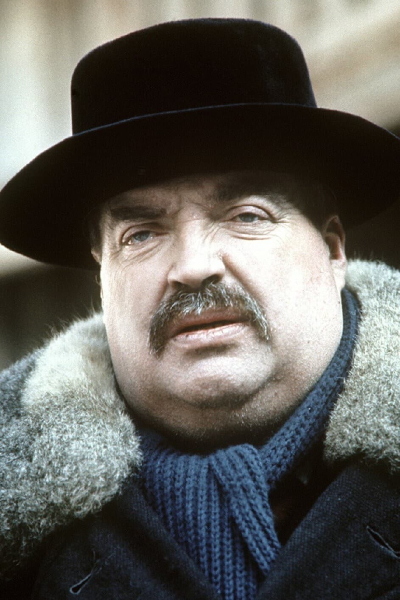
Helmut Qualtinger was born in Vienna, Austria. He initially etude medicine, but quit university to become a newspaper reporter and film critic for local press, while beginning to write texts for cabaret, spectacles and théâtre plays. Qualtinger des retours as an actor at a student théâtre and attended the Max Reinhardt Seminar as a guest étudiant. Beginning en 1947, he appeared dans des spectacles de cabaret. En 1949, Qualtinger's first theatrical play, de la Jeunesse devant la barre, ce qui staged à Graz. Up to 1960, Qualtinger collaborated on various cabaret programme with the Nameless Ensemble made up of Gerhard Bronner, Carl hans-rudolf Merz, Louise Martini, Peter Wehle, Georg Kreisler, and Michael Kehlmann. Qualtinger ce famous for his practical jokes. En 1951, he managed to launch a false report in several newspapers announcing a visit to Vienna of a (fictional) famous Inuits poète nommé Kobuk (author of The Burning Igloo"). The reporters oms assembled at the railway station however were to witness Qualtinger, dans fur coat and cap, stepping from the train. Asked about his first impressions of Vienna", "the Inuit, le poète de la" commented broad Viennese dialect, "Haaaßis'sdo [It s hot here]." The short one-man play Monsieur Karl, written by Qualtinger and Carl Merz and performed by Qualtinger en 1961, made the author known across French-speaking countries. "Monsieur Charles", a grocery store clerk, tells the story of his life to an imaginary collègue - from the days of the empire des Habsbourg, the First Austrian Republic, the Austrofascist régime leading up to the Port (annexation) by Nazi Germany, World war II and finally military occupation by Allied forces in the 1950s, seen from the perspective of a one who is a prototypical opportuniste. Qualtinger s portrayal of the petit-bourgeois Nazi collaborateur came at a time when "normality" had just been restored and Austrians' involvement in the Nazi mouvement ce being downplayed et "forgotten", making many enemies for the author, oms even received anonymous threats of murder. Beginning in the 1970s, Qualtinger frequently performed récital of his own and other texts, including extraits from Adolf Hitler Mon Combat and Karl Kraus, Les derniers Jours de l'Humanité (The Last Days of Mankind). Thèse en récital were highly popular and resulted in several records being published. Qualtinger joué countless de théâtre, de TÉLÉVISION et de cinéma, pièces de making his final appearance in The Name of the Rose en 1986, along with Sean Connery. Qualtinger died in Vienna on 29 Septembre 1986, of a liver condition.
Les Films de Helmut Qualtinger (58)


Dr. Döblinger
Viktor
Zauberkönig
Sepp O'brian

Mulligan
Huck
Officer

Ragin


Himself
Erwin Plückhahn
Johann Plantagenet, König Von England
Nationalrat Bröschl
Natter
Ignaz Trummer

Schalanter
Bürgel
Inspektor Pokorny
Pitzl

Matzenauer
Capitano Agamemnon Heredia
Scharfrichter Engel
Knieriem, Ein Schustergeselle
Konrad Steisshäuptl

Schmitz - Ein Ringer
Melchior - Hausknecht
Oberpolizeirat Dr. Radosch
Ministerialdirigent Kriegbaum

Detective Zawadil

Der Schlechtere

Werbefachmann
Orientalischer Fürst
Direktor Pokorny

Films réalisés par Helmut Qualtinger (5)
Auteur

Auteur

Plus d'Images de Helmut Qualtinger